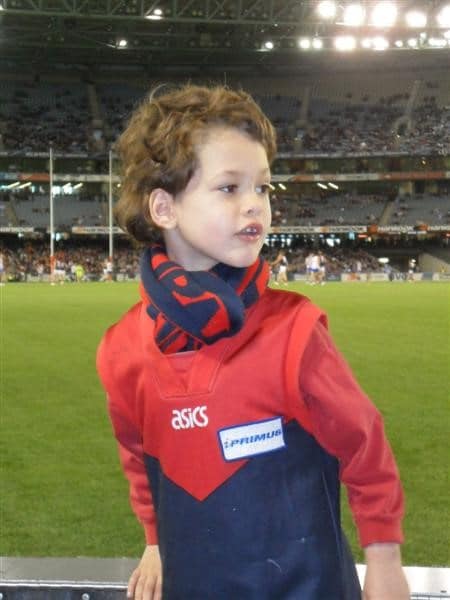
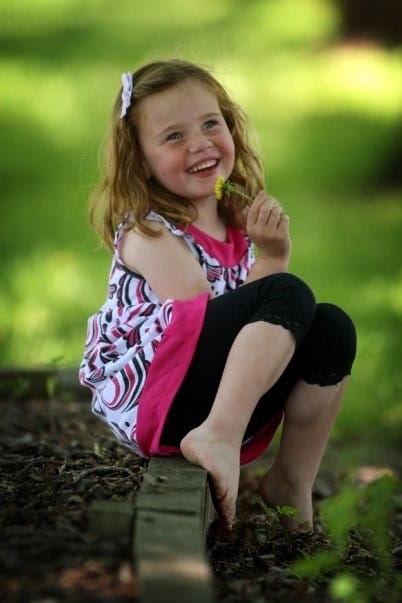
Holly and Stella
Based on an interview with Rachel, Holly and Stella’s mum (NSW, September 2025)
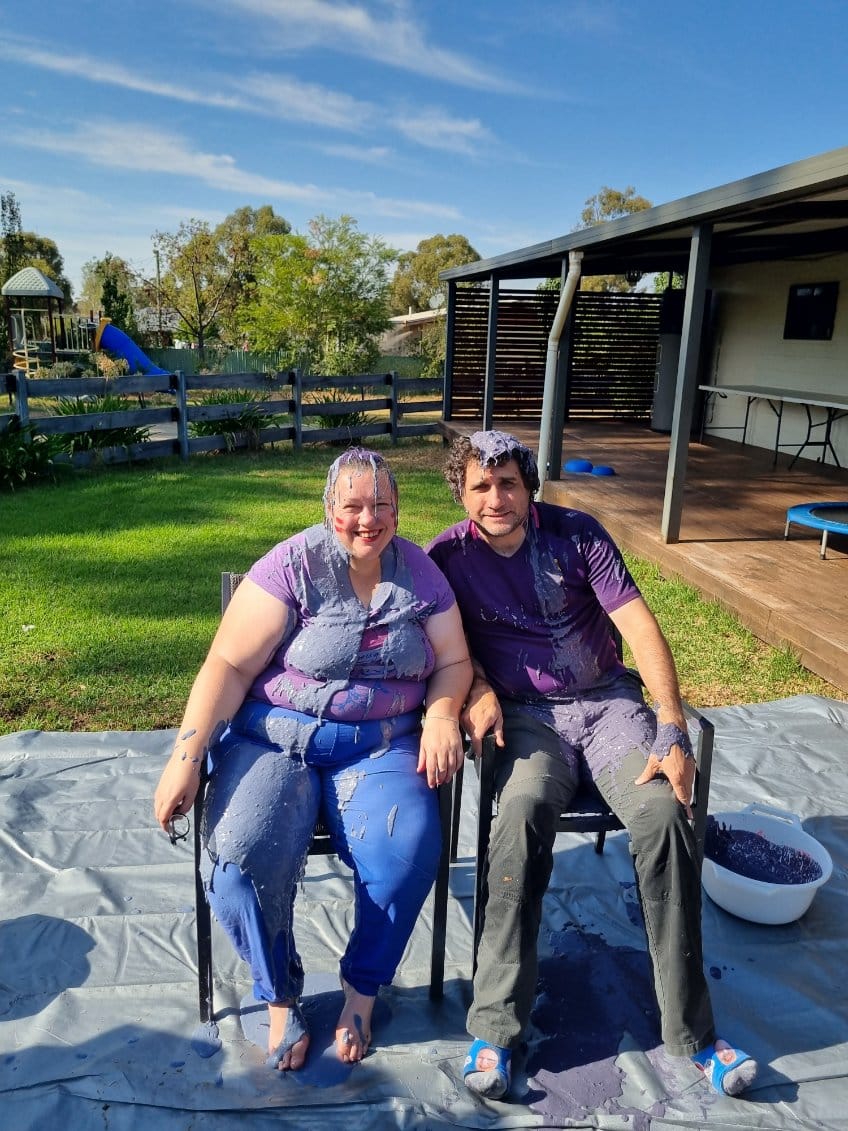
Rachel is a social worker. Her husband Chris is a nurse. As you might imagine, they are both well
used to dealing with challenging situations in their professional lives. What they had not expected
however, was that Rachel’s first pregnancy would present so many personal challenges.
Being pregnant with twins in rural NSW, Rachel was having more scans and ultrasounds than most
pregnant mothers. It was during one of these that the local hospital saw something unusual with
one of the twin’s hearts. Rachel was sent for a further ultrasound where it was found that one of her
babies had a heart rhabdomyoma. This led to an antenatal diagnosis of TSC (Tuberous Sclerosis
Complex). Like so many families in our Community, Rachel and Chris had no family history of TSC and genetic testing has subsequently shown they do not have TSC themselves.
The diagnosis, during what was already a difficult pregnancy, was accompanied by very ill-informed and inaccurate advice, which was hugely upsetting for the family. However, they made it very clear that they intended to go ahead with the birth of their twins. Fortunately, they received a referral to the TSC Clinic at Sydney Children’s Hospital and were put into the care of the expert team there.
Further complications in Rachel’s pregnancy meant that the twins – Holly, who lives with TSC and Stella, who has no signs of the condition – were born at just 31 weeks. This resulted in the girls spending the first 7 weeks of their life in NICU. At just 8 weeks of age Holly had her first EEG, which showed some epileptic activity and at 14 months of age, she had her first TSC-related seizure. Treatment began immediately after Holly’s EEG and this was the start of an ever-changing medication journey which many families in our Community are familiar with.
Initially Holly was treated with vigabatrin. Whilst this kept the infantile spasms away, it didn’t
improve her epilepsy. Over time she was placed on the ketogenic diet and treated with lamictal and
epilim. This combination kept her seizure free for 4 years.
Holly was gradually weaned off the ketogenic diet because of its high fat nature. Her worst run of
seizures occurred in 2022. Rachel thinks this was possibly due to hormones. This led to another
change in medications with keppra introduced and the doses of lamictal were increased.
Like many people living with TSC, in addition to her epilepsy, Holly also has kidney and facial
symptoms. When her renal tumours started growing around 6 years ago she was put on sirolimous.
12 months ago that was changed to everolimous.
In addition to these treatments, Holly has accessed allied health support since she was a child. This
isn’t always easy to access in their rural home. Currently she sees a local OT and physio and, being
very comfortable with online access thanks to COVID, she attends speech therapy online.
TSA’s website was the only online resource recommended by Sydney Children’s Hospital when the
family first connected with them. They found the information there a great help and it has continued
to be a trusted source of support. They have found the In Safe Hands resources particularly helpful
during the girls’ school years.
focus on taking each step as it comes and don’t try to think too far ahead.
Holly and Stella are now 11 years of age and attend the same local school. Holly has a global developmental delay and so has a one-to-one teacher’s aide. Rachel gave their girls’ school a copy of the Tubee book, which explains TSC to children, and Rachel was delighted when the school took the initiative to read the book and talk about TSC with the children on Global Awareness Day this year.
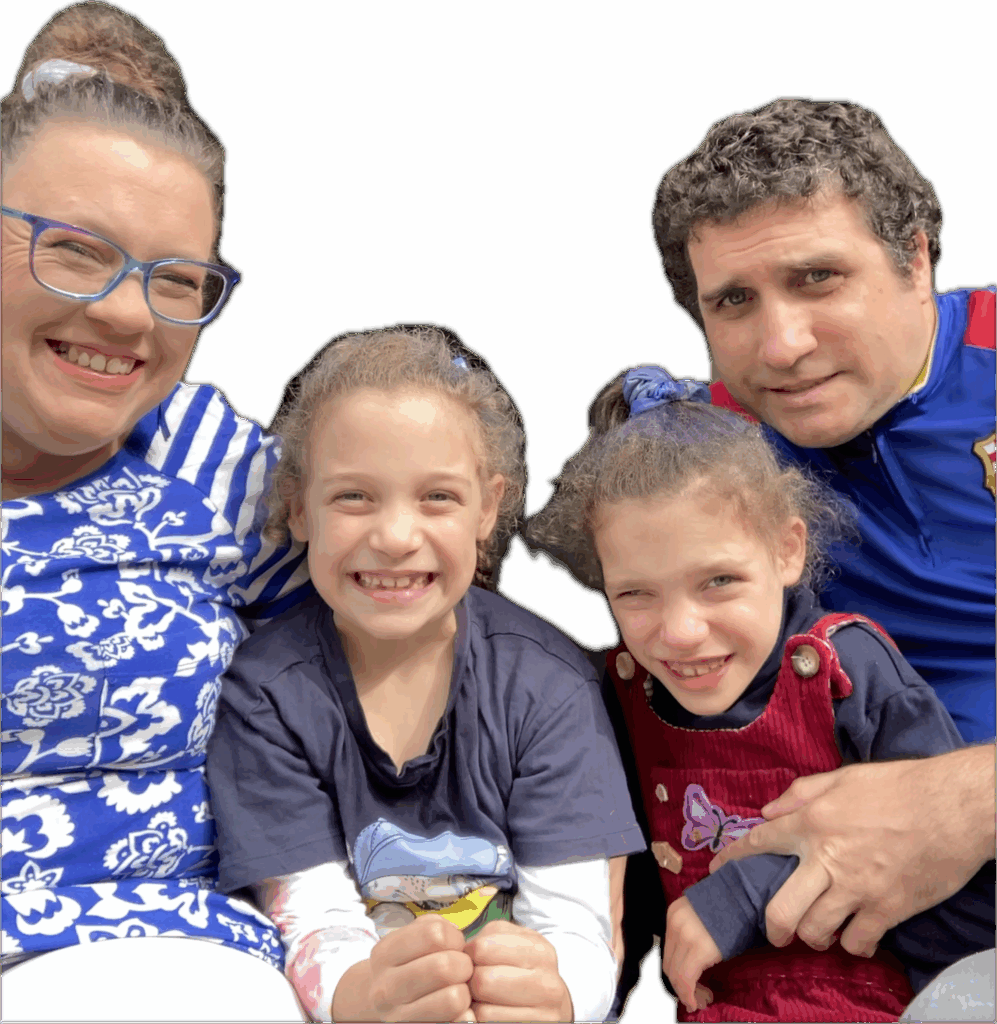
Rachel describes Holly as a fun and playful girl and says that she and her twin are, “typical sisters, fighting like cats and dogs one minute and the best of friends the next!”
Stella, of course, has never known life without Holly and she did not seem to realise Holly had a disability until someone else pointed it out to her when they were 8 years old. Although they are twins, Stella is very much her own person with her own distinct likes and interests, such as tennis and soccer. Rachel says she has never heard Stella say that she is missing out on anything because of Holly.
The family try to do focus on doing things that they can all do together. One of these is to go on an annual trip to Sydney so that Holly can be seen at Sydney Children’s. Rachel says they turn it into a big trip and visit the zoo, aquarium and other special places in Sydney so that the focus isn’t on Holly’s hospital appointments. When Stella was recently given the option of going on a school trip instead, she insisted she’d rather go to Sydney – and even asked to be included in the visit to the Starlight room at the hospital.
The annual trips to the hospital are supplemented by 6 monthly telehealth appointments. Rachel says that living rurally is probably one of the worst things about having a child diagnosed with TSC, as many of the local doctors have not even heard of TSC, let alone know anything about it. Ready access to ambulances during an emergency can also be an issue for the family as the ambulances are often in other towns. Christmas is another challenge, as the hospital in their town, where Holly is well known, closes down for about 6 weeks. A medical emergency at that time of year necessitates not only a long, 40km trip, but also means Rachel and Chris have to explain Holly’s condition and their family’s emergency plan to the City emergency team.
On the flip side, living where they do means that Rachel’s sisters and parents are only 30 minutes away and so as she says, “we have great support around us.” Rachel says the family also has the most beautiful church community which is another great support and they find their faith helps. them through the harder times and guides them through tough and important decisions.
Rachel believes the fact that they received such an early diagnosis, which they had time to process before the twins were born, has really helped her and Chris adopt a positive mindset towards Holly’s TSC. She says they focus on taking each step as it comes and don’t try to think too far ahead. They try not to worry unnecessarily. Rachel also thinks it helps that they were slightly older parents. As she remarks, “Having the experience we have in life has given us the tools to navigate the challenging times that you can go through as a parent to a TSC child”. Having a child with TSC has taught us to think differently and we truly live each day as if it’s a blessing.
Due to Holly’s complex needs, Rachel stopped working when the girls were 5. She found that juggling the demands of social work and TSC was just too tricky. In hindsight she believes it was the best decision she could have made, as she gets to spend as much time as she can with her girls. Rachel also recognizes that her social work background is invaluable when dealing with health and support services, such as the NDIS and her training helps her be assertive and advocate when she and Chris don’t feel they are being listened to. That, she says, happens, “more often than I would have imagined! “
The couple’s advocacy is not just with Holly’s health care professionals and school but actually extends way beyond this. They help with doctor exams and assessments at the University of NSW location in Wagga every year. This is something that they feel is really important as it brings awareness to TSC and they hope it will ensure other families get better initial advice compared to the terrible advice they were given eleven and a half years ago. Additionally, Rachel shares thoughts and practical tips on complex-needs parenting on social media as a way of trying to support others in a similar position to them.
Whilst Rachel and Chris could not possibly have foreseen the personal challenges parenthood has presented them with, they are certainly rising to the challenges. They remain positive and present, doing their best not just for their beautiful girls, but also to help other people navigating life with TSC.